
For the Indian Commercial and Industrial (C&I) sector, June 1, 2026, isn't just another date on the calendar. It marks a significant regulatory pivot point that could fundamentally change the economics of your next solar project.
The Ministry of New and Renewable Energy (MNRE) has set a firm deadline: from June 1st, all solar projects falling under specific grid-tied categories, including Net-metering and Open Access, must comply with the ALMM (Approved List of Models and Manufacturers) List-II. This isn't just about modules anymore; it’s about the cells inside them.
If you’re a business owner or a solar developer in India, you know what this usually means: restricted choices, domestic price premiums, and potentially missing out on the world’s most advanced high-efficiency global solar technologies.
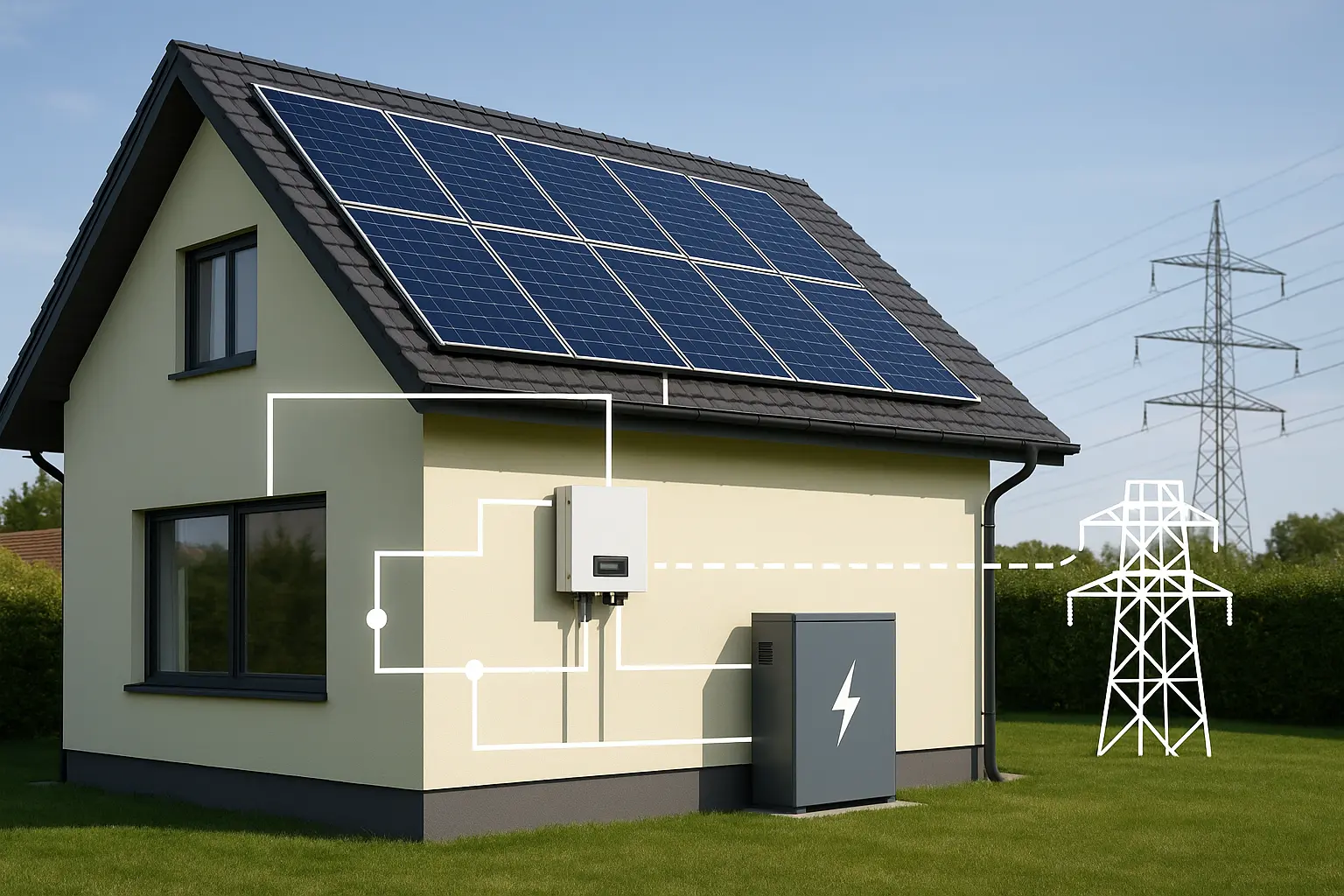
But there is a strategic way to bypass these constraints while actually building a more resilient, higher-performing energy asset. The answer lies in Behind-the-Meter (BTM) Solar + BESS (Battery Energy Storage Systems) architecture.
The Compliance Trap: Understanding the June 1st Mandate
To understand why a strategic shift is necessary, we first need to look at what the MNRE mandate actually enforces.
The ALMM regulation was designed to promote domestic manufacturing. Initially, it applied to solar modules (List-I). However, the new mandate extending to List-II (Cells) from June 1, 2026, tightens the net.
If your project is registered for Net-metering or utilizes Open Access to wheel power, you are legally bound to source modules where both the panel and the internal cells are from the approved domestic list. While this supports local industry, it often puts C&I players in a bind:
- Limited Tech Access: Global innovations in N-type TOPCon or HJT cells often reach international markets faster than they appear on the ALMM list.
- Price Premiums: Domestic DCR (Domestic Content Requirement) modules can command a significant price premium over global tier-1 alternatives.
- Supply Chain Bottlenecks: As the deadline approaches, domestic manufacturers face a surge in demand, leading to lead-time delays for large industrial installations.
For a deep dive into how these systems usually connect, you might want to review our guide on how commercial solar systems work.
The Strategic Escape: BTM Solar + BESS Architecture
What if you didn't have to play by the grid-interaction rules?
The ALMM and DCR mandates apply specifically to projects that interact with the grid through regulated schemes like Net-metering or Open Access. Purely captive, behind-the-meter (BTM) installations that do not export power back to the grid currently sit outside these specific MNRE mandate categories.
How it works: Zero-Export & 100% Consumption
By designing a system for 100% captive consumption, you essentially move "behind the meter." In this architecture, your solar plant is synchronized with your internal load but is technically prevented from pushing power back into the DISCOM's grid.

This setup typically involves two critical components:
- Zero-Export Relays: These intelligent devices monitor the point of common coupling. If your solar production exceeds your instantaneous factory load, the relay throttles the inverters within milliseconds to ensure zero back-feed.
- BESS (Battery Energy Storage System): Instead of wasting that "excess" solar energy by throttling it, you store it. A BESS allows you to capture every kilowatt-hour your panels produce and use it during peak pricing hours or after sundown.
By adopting this BTM + BESS strategy, you are no longer seeking "Net-metering" approval. You are simply installing a high-tech appliance on your premises that reduces your grid draw. This allows you the freedom to choose the world's most efficient non-DCR global modules, often at a lower cost and higher performance rating.
Technical Edge: Pixii BESS and the Power of Modularity
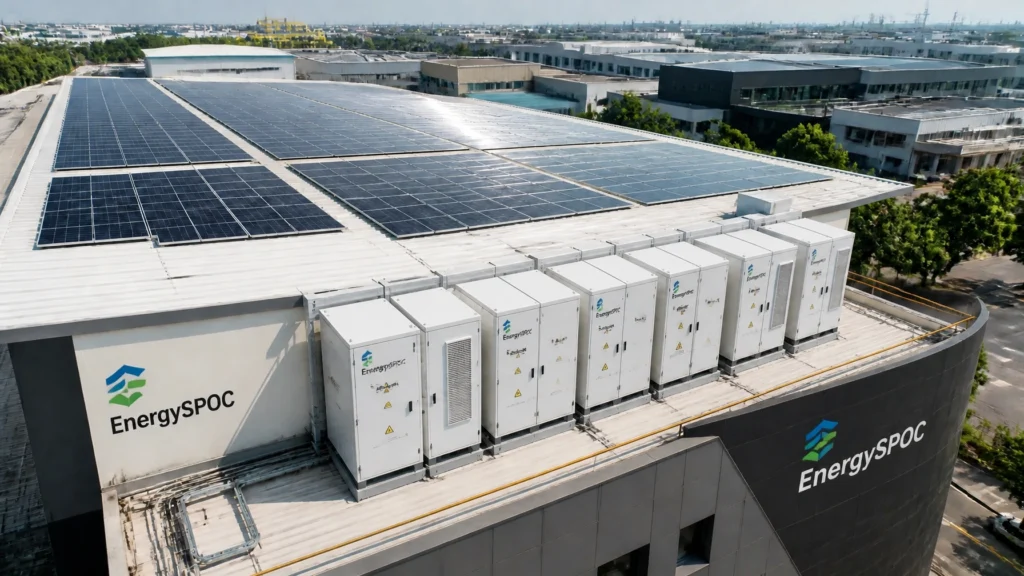
At EnergySpoc, we don't just advocate for this strategy; we provide the engineering backbone to make it happen. Central to this is our partnership with Pixii, a Norwegian pioneer in modular energy storage.
Unlike traditional high-voltage battery systems that can be complex and intimidating, Pixii technology uses a 48V safe architecture. This is a game-changer for Indian industrial environments.

Why Pixii is the "Insider's Choice":
- Hot-Swappable Modularity: Need to expand your storage? Just slide in another module. You don't need to shut down the entire system or redesign your electrical room.
- Safety First: The 48V DC architecture eliminates high-voltage DC risks, making it safer for your facility staff to be around.
- High Efficiency: With a 96.9% maximum efficiency rating, very little energy is lost in the conversion process.
- Software-Defined: The Pixii system acts as an inverter, rectifier, and MPPT tracker all in one, seamlessly managing the flow between your solar panels, the battery, and your factory load.
For businesses in Mumbai or Pune, where space is at a premium, the compact footprint of the PowerShaper series (ranging from 50kW to 1MW+) offers a massive advantage. You can learn more about these commercial solar installation methods on our blog.
The Business Case: Beyond Just Compliance
Bypassing the MNRE mandate is the "why" for the timing, but the "why" for the long-term investment is even stronger. Transitioning to a BTM Solar + BESS model offers advantages that a standard grid-tied system simply cannot match:
1. Access to Global Module Technology
By staying outside the ALMM/DCR requirement, you can source the latest N-type TOPCon modules from global leaders. These panels offer lower degradation rates and better performance in the high-heat conditions of Maharashtra, ensuring a better ROI over 25 years.
2. Avoiding the Price Premium
Domestic DCR modules often carry a 15-25% price premium due to the cell-level requirements. By opting for a BTM strategy, you can redirect those savings into the BESS system, effectively getting your storage at a "discount" compared to the total cost of a compliant grid-tied system.
3. 24/7 Reliability & Peak Shaving
In industrial hubs like Navi Mumbai or Vasai, "Maximum Demand" charges can be a significant portion of the electricity bill. A BESS allows for Peak Shaving, using stored battery power during your factory's highest demand periods to keep your grid bill low.
4. Zero DISCOM Friction
Getting Net-metering or Open Access approvals can sometimes take months of paperwork and inspections. A BTM captive system with a zero-export relay typically involves a much simpler NOC process, as you aren't asking the DISCOM to buy your power or use their lines for wheeling.
For a look at how we've implemented high-capacity systems across the region, check out our commercial solar installation guide.
The EnergySpoc Advantage: Engineering for the Indian Context
Installing a BTM + BESS system isn't a "plug-and-play" job. It requires precision engineering, custom load analysis, and a deep understanding of local regulatory nuances.
EnergySpoc provides an End-to-End solution. We don’t just sell you panels and batteries; we manage the entire lifecycle:
- Free Energy Audit: We analyze your 12-month load profile to size the BESS perfectly for your peak shaving needs.
- Custom Engineering: Our designs are tailored for Mumbai's weather, including high-wind-load mounting structures and heat-optimized battery enclosures.
- Financing Support: We facilitate financing through our 20+ partners, offering options that can make the system cash-flow positive from Day 1.
- MNRE-Certified Teams: Our installers follow strict safety protocols, ensuring your industrial asset is protected.
Conclusion: Don't Wait for the Deadline
The June 1, 2026 mandate is a signal that the regulatory landscape for solar in India is tightening. While the government's push for domestic manufacturing is clear, C&I players must remain agile to protect their bottom line.
By moving to a Behind-the-Meter Solar + BESS model, you aren't just "bypassing" a rule; you are upgrading your facility to a modern, independent microgrid. You gain access to the best technology the world has to offer, avoid unnecessary domestic premiums, and secure your energy future against rising grid costs and grid instability.
Ready to see how BTM + BESS fits your facility?
Contact EnergySpoc today for a customized ROI projection and site assessment. Let’s build a system that works for your business, not just for the regulator.
Frequently Asked Questions (FAQ)
Q: Is it illegal to use non-ALMM modules for C&I?
A: No. It is perfectly legal for purely captive, behind-the-meter projects that do not use government subsidies, net-metering, or open access. The mandate applies to specific grid-interactive categories.
Q: What is a Zero-Export Relay?
A: It is a protection device that ensures no power flows back to the DISCOM grid. This is essential for maintaining your "captive" status and avoiding the need for net-metering approvals that trigger ALMM rules.
Q: How long does a Pixii BESS last?
A: Pixii uses Lithium Iron Phosphate (LFP) chemistry, which is rated for 10,000+ cycles at 80% Depth of Discharge. This typically translates to well over 10–15 years of daily industrial use, backed by a 10-year warranty.
Q: Can I add more batteries later?
A: Yes. One of the biggest advantages of the Pixii systems we install is their modularity. You can start with a 50kW/51kWh system and scale up as your load grows without needing a full system overhaul.
Q: Does this work for existing solar installations?
A: Absolutely. We offer AC-coupled BESS solutions that can be retrofitted to any existing solar plant, allowing you to convert your old grid-tied system into a modern BTM + BESS powerhouse.