

Let’s be honest: shopping for solar panels in 2026 feels a bit like walking through a tech bazaar. You’re bombarded with ads promising “Zero Electricity Bills” and “Lowest Prices Guaranteed.” You see a flyer quoting ₹35,000 per kilowatt, and then a neighbor tells you they paid ₹65,000.
What gives? Is someone getting ripped off, or is there a secret menu the experts aren’t telling you about?
At EnergySPOC, we believe the “black box” of solar pricing needs to be cracked wide open. If you’re looking into solar panel price options in Mumbai or the wider MMR region, you deserve to know what actually goes into that final invoice.
Buckle up. We’re about to reveal the “insider” secrets of solar panel installation cost that most salespeople conveniently skip during their pitch.
1. The “Per Watt” Trap: Why the Sticker Price is a Lie
If you walk into a showroom and ask, “What’s the price of a solar panel?” a salesperson might give you a number like ₹25 per watt. You do the math for a 5kW system and think, “Great, that’s just ₹1.25 Lakhs!”
Wrong.
Looking at the solar panel price alone is like buying a high-performance Ferrari engine and expecting it to drive you to work without wheels, a chassis, or a steering wheel. The panels themselves usually account for only 40% to 50% of the total project cost.
When you see suspiciously low prices advertised online, they are often quoting the “base component” price. They aren’t factoring in the Balance of System (BoS), labor, or the mountain of paperwork required for the solar subsidy India programs.
2. The Hidden Heroes: Balance of System (BoS)
The components you don’t see in the glossy brochures are often the ones that determine if your system lasts 25 years or dies after the first Mumbai monsoon. These are the BoS costs:
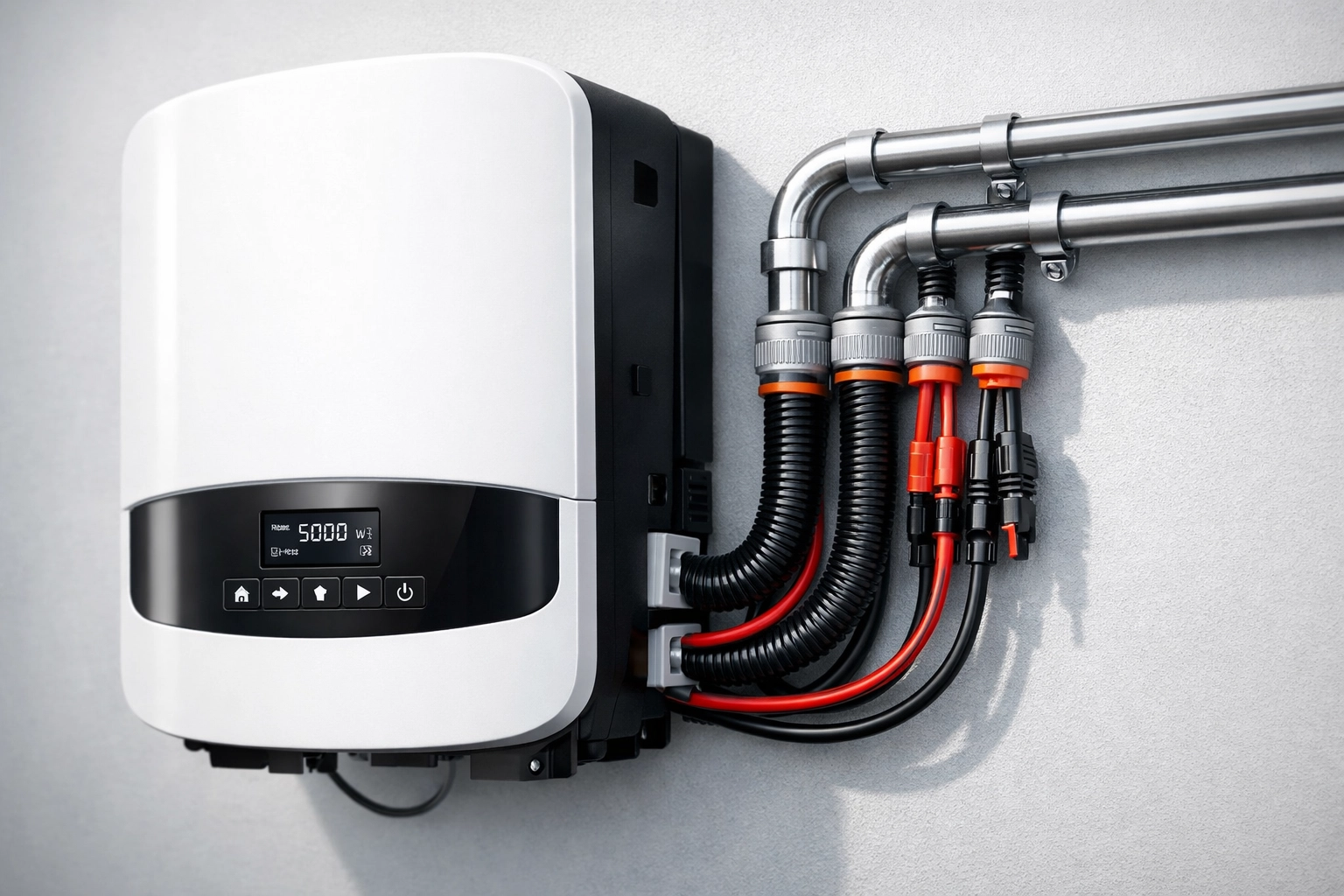
- The Inverter: This is the “brain” of your system. A cheap, unbranded inverter will fail within 3–5 years. A high-quality string or micro-inverter might cost more upfront, but it ensures your rooftop solar system actually converts sunlight into usable AC power efficiently.
- The Structure: In Mumbai and coastal areas, salt air is a silent killer. Standard iron structures will rust in two seasons. You need Hot-Dip Galvanized (HDG) or Aluminum structures. If an installer quotes a low price, check if they are cutting corners on the thickness of the metal.
- Cabling and Earthing: Using undersized DC cables is a fire hazard. Proper earthing and Lightning Arrestors (LA) are non-negotiable for safety, yet they are often the first things “budget” installers omit to lower the mumbai solar panel installation cost.
3. The DCR vs. Non-DCR Drama: A Critical Mandate
This is a point you cannot afford to ignore in 2026. As per the new MNRE (Ministry of New and Renewable Energy) rule, all solar projects commissioned after August 1st, 2026, must mandatorily use DCR (Domestic Content Requirement) panels.
- The Risk: If you choose Non-DCR panels and your system isn’t commissioned before the August 1st deadline, you won’t just lose the solar subsidy india, your project may not be commissioned at all. This makes Non-DCR a high-risk gamble.
- The Mandate: As of today, March 26, 2026, the government requires DCR panels for all grid-connected projects. While new guidelines could potentially provide an extension, the current rule is firm.
- Why it matters for your budget: DCR panels are made in India (cells and modules). Because they are now mandatory for commissioning, demand is high, which affects the overall solar panel price.
At EnergySPOC, we recommend sticking with DCR modules to ensure your rooftop solar system is compliant and gets approved without any technical or legal roadblocks. You can read more about how this affects you in our PM Surya Ghar Solar Subsidy Guide.
4. 2026 Tech Standards: Don’t Buy Yesterday’s Tech
It is 2026. If an installer is trying to sell you “Polycrystalline” panels, walk away. Heck, even “Mono PERC” is starting to look like a flip-phone in a smartphone world.
The current gold standard is TOPCon (Tunnel Oxide Passivated Contact) technology.
- Why it matters: TOPCon panels have better “low-light” performance (perfect for those cloudy Mumbai days) and a lower degradation rate.
- The Secret: Many installers are sitting on old “Mono PERC” inventory and will offer you a “special discount” to clear their warehouse. Don’t fall for it. Insist on the latest high-efficiency modules to ensure your 8kW solar system output stays high for decades.
5. The “Tier-1” Myth Revealed
“We only use Tier-1 panels!” sounds impressive, doesn’t it? Here is what they don’t want you to know: Tier-1 is a financial ranking, not a quality ranking.
BloombergNEF creates the Tier-1 list to tell banks which companies are “bankable” (unlikely to go bankrupt). It has absolutely nothing to do with the soldering quality, the glass thickness, or the actual efficiency of the panel on your roof.
While most Tier-1 brands are good, some non-Tier-1 boutique manufacturers produce superior panels for residential use. Don’t let a “Tier-1” sticker be the only reason you pay a premium. Look at the local warranty support and the real-world performance data in Indian conditions.
6. The “Hidden” Costs of Cheap Labor
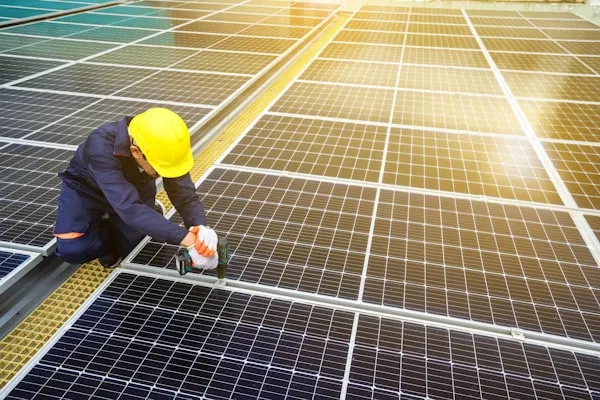
We’ve seen it all in the MMR region: panels held down by bricks, wires hanging loosely across the roof, and “engineers” who disappear the moment your net meter starts acting up.
A significant portion of your solar panel installation cost goes toward the people walking on your roof.
- Liaisoning: Getting approvals from MSEDCL or Tata Power is a bureaucratic nightmare. Professional installers include this in their fee.
- Safety: If a worker falls off your roof because the installer didn’t provide safety harnesses, you could be legally liable.
- Waterproofing: A cheap installer will drill holes in your RCC slab and leave them. A professional uses specialized chemical grouting to ensure your roof doesn’t leak during the next cyclone.
Check out our guide on why choosing local solar installers in Mumbai is a safeguard for your investment.
7. Real Talk: What Should You Actually Pay?
While prices fluctuate, here’s a rough guide for a high-quality, end-to-end installation in 2026 (pre-subsidy):
| System Size | Estimated Cost (Quality Build) | Best For |
|---|---|---|
| 3kW | ₹1.8L – ₹2.2L | Small families / 1-2 ACs |
| 5kW | ₹2.8L – ₹3.4L | Mid-sized villas / 3 ACs |
| 10kW | ₹5.2L – ₹6.0L | Large homes / Small businesses |
Note: These are estimates for a complete, turnkey solution including premium inverters, HDG structures, and all permits.
8. Why EnergySPOC is Different
Most companies want to sell you a product. We want to sell you a 25-year energy solution.
Based in Mumbai, EnergySPOC specializes in navigating the unique challenges of the city, from high-rise wind loads to complex housing society bylaws. We don’t hide costs in the fine print. When we give you a quote for residential rooftop solar, it includes:
- Site survey and shadow analysis.
- The latest TOPCon DCR modules (for maximum subsidy).
- High-grade BoS components suited for Mumbai’s humidity.
- Full MSEDCL/Tata Power/Adani liaisoning.
We are your “Single Point of Contact” (SPOC) for everything solar. No chasing five different contractors; just one team, one transparent price.
The Bottom Line
The “secret” to a good solar panel price isn’t finding the lowest number, it’s finding the highest value. A system that is ₹20,000 cheaper but produces 15% less power or breaks down in three years is the most expensive mistake you can make.
Don’t buy a solar system based on a flyer. Buy it based on data, engineering, and trust.
Ready to see the real numbers for your roof?
Stop guessing and start saving. Get a 100% transparent, no-hidden-cost quote from the experts at EnergySPOC today.
Get Your Transparent Quote Now
Frequently Asked Questions
Q: How much is the solar subsidy in India for 2026?
The subsidy amount depends on the current slabs under the PM Surya Ghar Muft Bijli Yojana. Generally, it covers a significant portion of the cost for systems up to 3kW, with diminishing returns for larger residential setups. Check our subsidy guide for the latest figures.
Q: Can I install solar on a flat roof in a Mumbai apartment?
Yes! We specialize in elevated structures that allow you to use your roof space for walking while the panels sit safely above. We also assist with housing society permissions.
Q: What is the ROI (Return on Investment) for rooftop solar?
In most Mumbai households, the system pays for itself in 3 to 4 years. Given that the panels last for 25 years, that’s over two decades of essentially free electricity.

ALCM ALMM 2 BESS commercial solar benefits commercial solar panel installation commercial solar system cost DCR energy storage energy storage system ESS Industrial BESS Industrial solar lithium battery maharashtra solar policy MNRE DCR Policy net metering for commercial PM Surya Ghar Residential Solar Subsidy Scheme Rooftop Solar Rs. 78000 Subsidy Solar BOS Solar DCR modules Solar Hybrid system solar myths Solar policy solar pv system solar ROI for businesses Solar Secret Solar Subsidy solar sustainability for companies Sustainability TOPCon Solar Panels